WORSHIP FAQ
If you have questions, you are in good company; every one of us sitting in these pews was a newcomer once, and most of us are still asking questions of our own.
The pew backs include our hymnals and The Book of Common Prayer. The words used in our worship service (the liturgy) are taken from The Book of Common Prayer, and the priest or worship leader may refer to the page numbers as we go through the service.
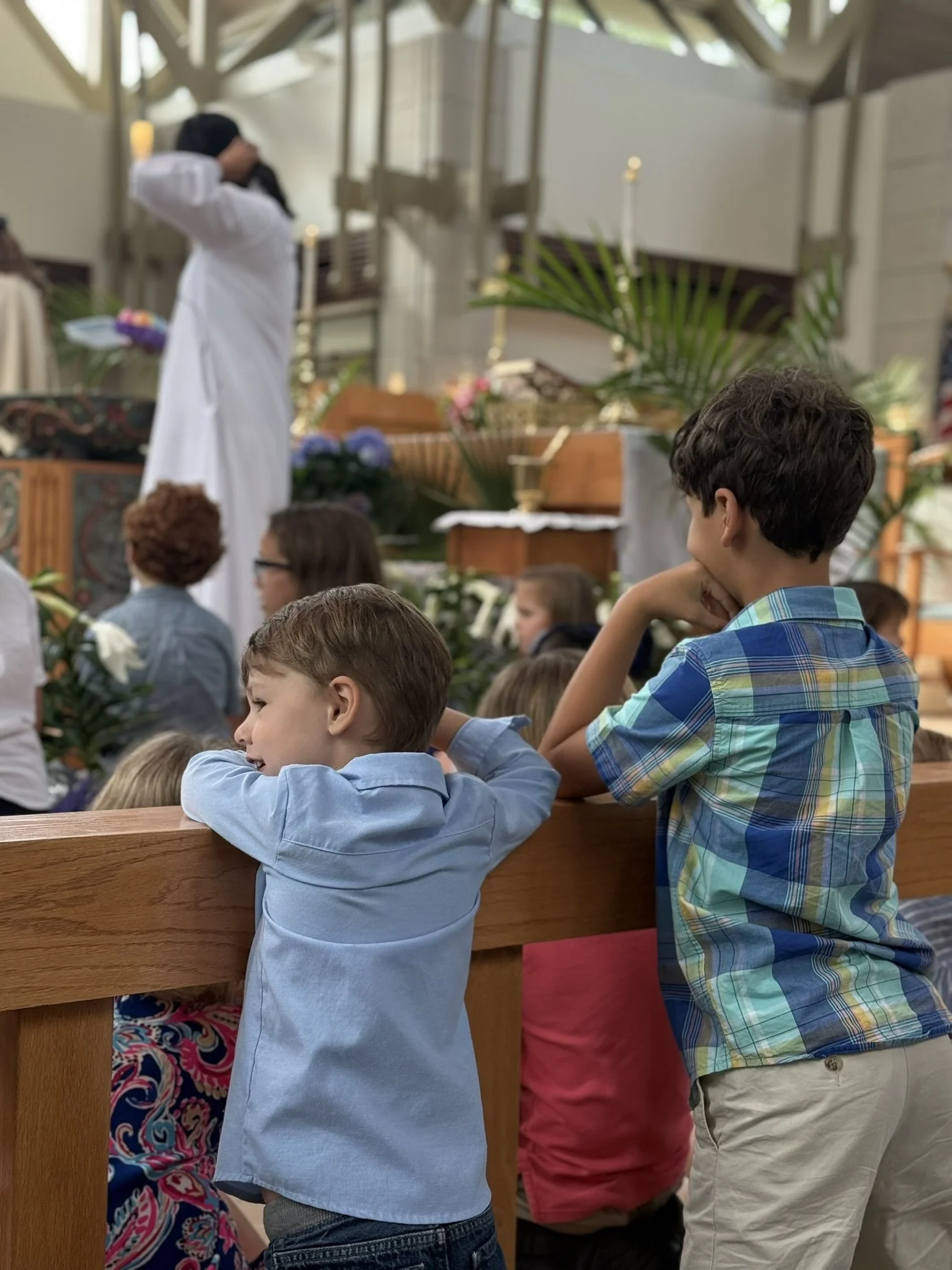

WHAT ARE THESE BOOKS IN THE PEW BACK IN FRONT OF ME?
WHY DO SOME PEOPLE KNEEL & PRAY BEFORE THE SERVICE BEGINS?
Some people take time before the service to say "hello" to God to prepare their hearts and minds for worship. If you are not sure what to pray in preparation for worship, personalizing the Collect of Purity may be a good start, but is not mandatory:
Almighty God, to you my heart is open, my desires known, and from You no secrets of mine are hid. Cleanse the thoughts of my heart by the inspiration of your Holy Spirit that I may perfectly love you, and worthily magnify Your holy Name; though Christ our Lord, Amen.
WHY DO WE STAND AND SIT A LOT DURING WORSHIP?
The general guide is that we stand to sing, sit to listen, and kneel to pray. We like to think that we involve our entire being in worship. We, of course, also engage our minds as well in worship, but at times our senses can deliver God's presence to our hearts in a way that is beyond our understanding. We are reminded that God is a mystery. That mystery is often communicated to us through the beauty of our stained glass windows or strains of glorious music.
WHY DO SOME PEOPLE BOW AND SOME KNEEL BEFORE ENTERING THE PEWS, AND OTHERS DO NOTHING AT ALL?
What you are noticing is called "reverencing," and people have different ways of doing it. Some bow in the direction of the altar, some "genuflect" (touch their knee to the floor), others reverence silently or without gesture. What is important is that you do what feels comfortable and what helps your worship. None of these gestures is expected or required of you to worship with us.
WHAT HAPPENS AT THE BEGINNING OF THE SERVICE?
Either a priest or lay staff member will greet the congregation at the lectern and give some general church announcements. Then the opening hymn and processional will begin. If you love the hymn, belt it out, whether you are in tune or not. As the Scriptures say, “Make a joyful noise unto the Lord” (Psalm 100:1). If you do not know the hymn or do not want to sing, you can just read the words to yourself or look around and enjoy the beauty of the nave (worship space) and the music.
WHO ARE THE PEOPLE IN THE ROBES?
In the Episcopal Church, people wearing robes, known as vestments, include clergy, altar servers (acolytes), and Eucharistic Ministers. The wearing of these robes is a reminder that what we do here today is different. We have left behind our everyday lives and entered into God’s presence. Usually, the opening procession will be led by the acolytes holding crosses and torches. The cross reminds us of the centrality of Jesus’ cross to our faith and the torches share the light of Christ. Our acolytes are then followed by the lay Eucharistic Ministers and then ordained Clergy.
HOW DOES HOLY COMMUNION WORK?
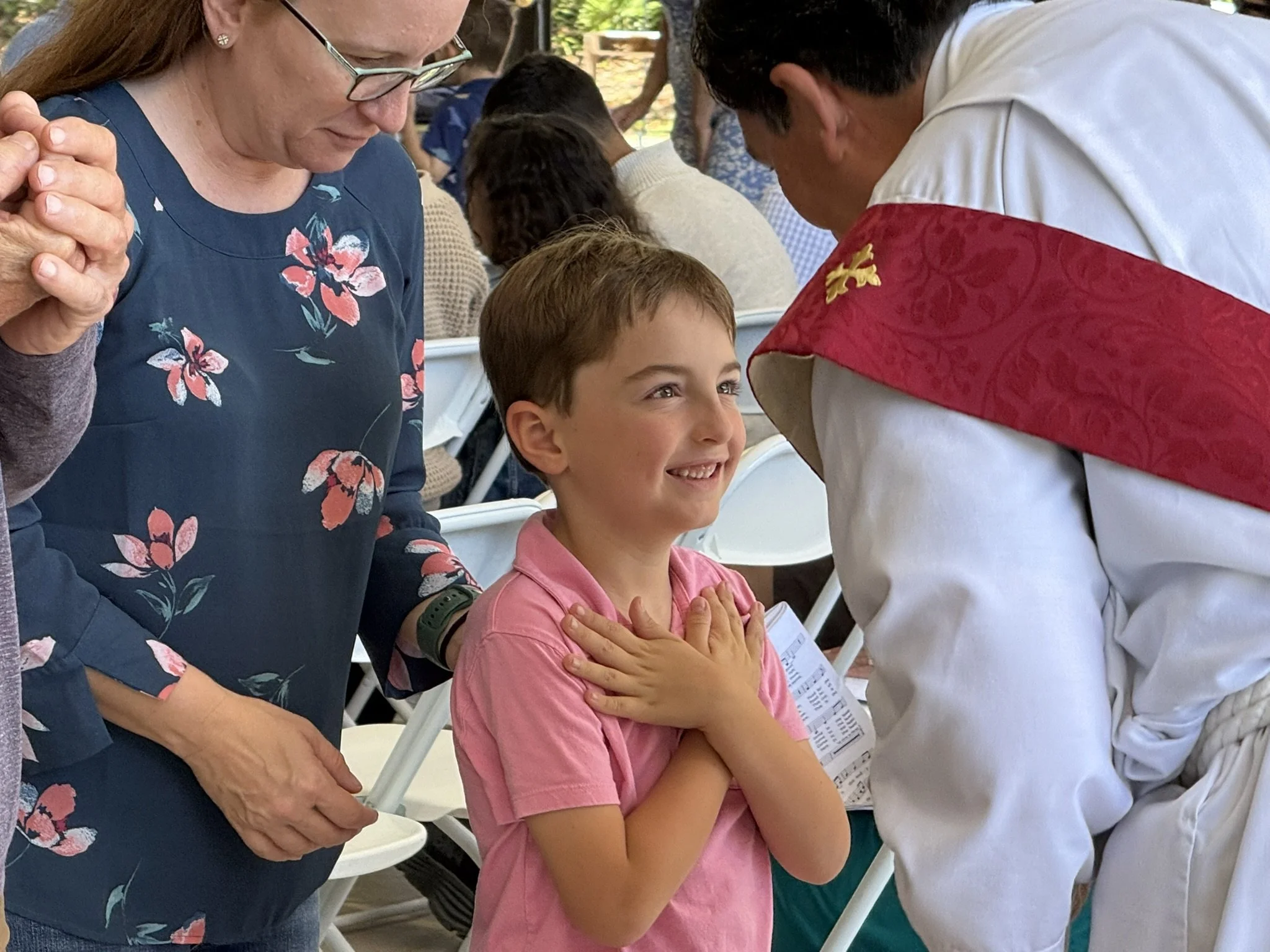
All baptized Christians are welcome to receive Holy Communion. If you do not feel comfortable receiving communion at this time, you are still invited to the “table” (our altar rail) to receive a special blessing from our clergy. Simply cross your arms over your chest to signify to our clergy that you wish to receive a blessing rather than communion.
For those receiving communion, you may kneel or stand. Holy Communion is received by first eating the bread and then by drinking of the cup. The normal custom for receiving bread is to place one hand, palm up, into the palm of the other hand and lift both to the priest to receive the wafer.
Next comes the wine. It is real wine, not grape juice. When our Eucharistic Minister comes to you, you may guide the cup to your lips and take a small sip. A second option, if you prefer, is to dip a portion of your wafer into the wine as it is offered to you rather than drinking from the common cup. A third option is to cross your arms over your chest, which signifies to the minister that you do not wish to receive the wine, which is totally acceptable. You can get more information about Communion in our Communion FAQs.